Why Installing Kitchen Cabinets is Expensive: Understanding the Cost Factors

Installing kitchen cabinets can be a costly endeavor. Homeowners often wonder why the expense is so high. The truth is, several factors contribute to the high cost of kitchen cabinets.

a newly installed kitchen cabinets

Leona Rodriguesi of Mornington cabinet maker highlights that “One of the primary reasons why kitchen cabinets are so expensive is the materials used to make them. Cabinets are often made from high-quality wood, which can be costly. Additionally, cabinets may feature built-in features like drawers and pantries, which add to the overall cost. The design of the cabinets also plays a role, as more intricate designs can be more expensive to produce.”

Factors Influencing the Cost of Kitchen Cabinets

When it comes to installing kitchen cabinets, the cost can vary greatly depending on several factors. In this section, we will discuss the main factors that influence the cost of kitchen cabinets.

Materials and Construction

One of the most significant factors affecting the cost of kitchen cabinets is the materials used in their construction. Cabinets made from solid hardwoods such as oak, maple, and hickory are generally more expensive than those made from MDF or veneer.

Solid wood cabinets are more durable and can last longer, but they also require more maintenance and care.

Another factor that affects the cost of kitchen cabinets is the construction method. Custom-made cabinets are usually more expensive than stock cabinets because they are made to order and require more time and effort to construct. However, custom cabinets offer more options for features and customization, such as lazy susans, cutting boards, wine racks, and custom spice pantries.

Design and Customisation

The design and customisation of kitchen cabinets can also significantly affect their cost. Door styles that require routing or embellishment, for example, will cost more than flat profile cabinets.

The more customised the cabinets are, the higher the cost will be. For lesser cost, you can visit Mornington cabinet maker.

Custom cabinets offer more design options and can be tailored to fit the specific needs of your kitchen. They can be made to fit any space, regardless of size or shape, and can include features such as drawers, shelves, and specialty pieces.

Hardware and Finishing Touches

Hardware and finishing touches can also contribute to the cost of kitchen cabinets. Hinges, handles, latches, and drawer pulls can vary in price depending on the material and finish.

Metal hardware, silver hardware, and plated hardware are typically more expensive than plastic or painted hardware.

Soft-closing doors and drawers are also a popular feature that can add to the cost of kitchen cabinets. These doors and drawers have a self-closing ability that prevents slamming and extends the life of the cabinets. Finishes such as glazing, patinas, and Danish oil can also add to the cost of kitchen cabinets.

Installation and Additional Costs

When installing kitchen cabinets, several additional costs need to be considered. These costs can add up quickly, so it’s important to factor them into your budget before you start your kitchen remodel.

Labour and Expertise

One of the biggest costs associated with installing kitchen cabinets is the labour cost. Installing cabinets requires precision and expertise, and it’s not a job that you should attempt to do yourself unless you have experience.

Hiring a professional installer will ensure that your cabinets are installed correctly and that they will last for years to come. The cost of labour will depend on the complexity of the installation and the experience of the installer.

Removal and Renovation Considerations

If you’re replacing your existing cabinets, you’ll need to factor in the cost of removal and disposal. Removing cabinets can be a time-consuming and messy process, and it’s important to do it correctly to avoid damaging your walls or floors.

Additionally, if you’re planning to renovate your kitchen, you’ll need to factor in the cost of any additional work that needs to be done. This can include things like installing a new sink, upgrading your appliances, or adding additional storage space.

Delivery and Additional Features

When you’re purchasing kitchen cabinets, you’ll need to factor in the cost of delivery. Shipping costs can vary depending on the size and weight of your cabinets, as well as your location.

Additionally, if you’re looking to add any additional features to your cabinets, such as step stools, pull-out trash brackets, or built-in wine racks, you’ll need to factor in the cost of these as well.

These added functionalities can increase the overall price of your cabinets, but they can also make your kitchen more functional and efficient.


How to Estimate Your Roof Size: A Step-by-Step Guide

Estimating the size of your roof is an important step in any roofing project.

Whether you are planning to repair or replace your roof, you need to know the size of the area that needs to be covered.

This will help you determine the amount of roofing materials you will need and the cost of the project.

With Charles Jimerson of Commercial Roofing NJ, we will guide you through the process of estimating your roof size.

a newly installed roof of a home

To estimate your roof size, you need to measure the area of your roof.

This can be done by calculating the square footage of each section of your roof and adding them together.

You can use a roofing calculator or do the math yourself.

It is important to be as accurate as possible when measuring your roof. This ensures that you purchase the right amount of materials and avoid any unnecessary expenses.

The size of your roof can also affect the cost of your project.

The larger the roof, the more materials you will need, and the more labor will be required.

However, a larger roof may also mean a lower cost per square foot, as there are economies of scale in larger projects.

By accurately estimating the size of your roof, you can plan your project more effectively and avoid any surprises along the way.

Understanding Roof Dimensions and Calculations

When it comes to estimating your roof size, it’s important to understand the basic calculations involved.

This section will provide you with the knowledge you need to accurately measure your roof area, determine its pitch, and calculate the number of squares required for your roofing project.

Measuring Roof Area

To measure your roof area, you’ll need to determine the length and width of each section of your roof.

For a simple gable roof, this can be done by measuring the length and width of each section and multiplying them together to get the area of each plane.

If your roof has different sections or features, divide it into rectangles or triangles and find the area of each part individually.

To be as accurate as possible, it’s important to measure both the horizontal run and vertical rise of your roof.

You can then use the rise over run formula to determine your roof pitch and calculate the roof area accordingly.

Determining Roof Pitch

Roof pitch, also known as roof slope, is a measure of how steep your roof is.

It’s typically expressed as a ratio of the roof’s rise over its run. For example, a roof with a rise of 6 inches for every 12 inches of run would have a pitch of 6:12 or a 1:2 pitch.

Determining your roof pitch is important because it affects the amount of roofing material you’ll need.

You can use a roof pitch multiplier chart to determine the multiplier for your specific pitch. Then, you can use this multiplier to calculate the number of squares required for your roofing project.

Calculating Roof Squares

Roof squares are a unit of measurement used in the roofing industry to determine the amount of roofing material needed for a project.

One square is equal to 100 square feet of roofing area.

To calculate the number of squares required for your roofing project, divide the total roof area by 100.

For example, if your roof area is 1,500 square feet, you’ll need 15 squares of roofing material.

Factors Affecting Roof Size Estimation

When estimating the size of your roof, there are several factors to consider. These factors can affect the total cost of the project, as well as the amount of materials needed. Here are some of the most important factors to keep in mind:

Accounting for Roof Features

Roofs can have a variety of features that can affect the size and complexity of the project.

Skylights, chimneys, and dormers are just a few examples of features that can impact the calculations.

When measuring your roof, be sure to take these features into account and adjust your calculations accordingly.

Additionally, if your roof has any damage or needs repairs, these factors should also be taken into consideration.

Considering Roofing Materials

The type of roofing material you choose can also affect the size and cost of the project.

Asphalt shingles are a popular choice due to their affordability and ease of installation, but metal roofing and clay tiles can also be viable options.

Different materials require different amounts of materials and labor, which can significantly affect the overall cost of the project.

When estimating the size of your roof, be sure to take into account the type of material you plan to use.

Estimating Labor and Total Costs

In addition to materials, labor costs are another important factor to consider when estimating the size of your roof.

Labor costs can vary depending on your location, the complexity of the project, and the experience of the contractor.

Be sure to factor in both materials and labor costs when calculating the total cost of the project. This will give you a more accurate estimate of the total cost of the project.

Estimating the size of your roof requires careful calculations and consideration of several factors. By taking into account roof features, roofing materials, and labor costs, you can get a more accurate estimate of the total cost of your roofing project.

If you are unsure about any of these factors, it may be helpful to consult with a roofing contractor like Commercial Roofing NJ or use a roofing material calculator to get a more accurate estimate.

Can You Change Taps Without a Plumber? A DIY Guide

Dean Owens of Plumbers Warragul has to say “Are you wondering if you can change taps without a plumber? The answer is yes, you can. However, some plumbing jobs require a licensed professional. In Australia, regulations are in place to ensure that plumbing work is done safely and to a high standard.”

changing tap and pipes on sink

If you’re looking to replace a tap, it’s a relatively simple job that you can do yourself. You’ll need to turn off the water supply, remove the old tap, and install the new one. However, if you encounter any issues or are unsure about what you’re doing, it’s best to call a licensed plumber to avoid causing any damage or creating a safety hazard.

It’s important to note that there are limits to what DIY plumbing work you can do without a license. In Australia, certain plumbing jobs must be done by a licensed professional to ensure compliance with regulations and to protect the health and safety of the public. Always check the requirements in your state or territory before attempting any plumbing work yourself.

Understanding Tap Replacement

Assessing the Need for Replacement

Before you start replacing your tap, it is important to assess the need for replacement. If your tap is leaking or has become difficult to turn on and off, it may be time to replace it. In some cases, a faulty washer may be the cause of the problem, which can be easily replaced. However, if your tap is old or has signs of corrosion, it is best to replace it entirely.

Tools and Materials Required

To replace a tap, you will need a few tools and materials. These include an adjustable wrench, screwdriver, Teflon tape, and a new tap. It is also important to turn off the water supply to the tap before you begin any work. You can do this by using the isolating valve or turning off the water meter.

Safety and Preparation

Before you start replacing your tap, it is important to take some safety precautions. Make sure to wear gloves and eye protection to protect yourself from any sharp edges or debris. It is also important to disconnect any hot water supply to the tap to avoid any burns or scalding.

Once you have assessed the need for replacement, gathered the necessary tools and materials, and taken the necessary safety precautions, you can begin replacing your tap.

Start by removing the old tap by using a wrench to loosen the nut that holds it in place. Make sure to turn it counterclockwise to loosen it.

Once the old tap is removed, clean the threads on the pipes and attach the new tap by screwing it onto the threads. Make sure to use Teflon tape to ensure a tight fit. Tighten the nut with a wrench, but be careful not to overtighten it.

Executing the Tap Change

Changing taps is a relatively simple DIY plumbing job that you can do yourself without the need for a professional plumber. In this section, we will guide you through the process of executing a tap change in your kitchen or bathroom.

Removing the Old Tap

Before you can install a new tap, you need to remove the old one. Start by turning off the water supply to the tap. You can usually find the isolation valve under the sink or basin. If you can’t find the valve, turn off the main water supply to your house.

Next, remove the tap’s cover plate or decorative cap. You can use a flathead screwdriver to do this. Once you remove the cover plate, you will see the tap’s fixing nut. Use a spanner or adjustable wrench to loosen the nut and remove the tap.

Installing the New Tap

Once you have removed the old tap, it’s time to install the new one. Start by placing the rubber gasket or O-ring on the base of the tap. Insert the tap through the hole in the sink or basin and secure it with the fixing nut. Tighten the nut with a spanner or adjustable wrench.

Next, connect the tap’s flexible hoses to the water supply pipes. Ensure that you use the correct fittings for your tap and pipes. Tighten the fittings with a spanner or adjustable wrench. Turn on the water supply and check for any leaks.

Final Checks and Testing

After installing the new tap, turn on the water supply and check for any leaks. If you notice any leaks, turn off the water supply and tighten the fittings further.

Once you are satisfied that there are no leaks, replace the cover plate or decorative cap.

Congratulations! You have successfully changed your tap without the need for a professional plumber. Remember to test the tap’s functionality by turning it on and off several times. If you encounter any issues, contact a licensed plumber for assistance.

Dean Owens of Plumbers Warragul highlights that “It is important to note that if you are renovating your kitchen or bathroom, you may need to obtain a compliance certificate for any plumbing work you do.”

This certificate confirms that the work complies with Australian plumbing standards and is required by your insurance company in case of any future claims.

What is the Difference Between Plumbing and Pipes? A Clear Explanation

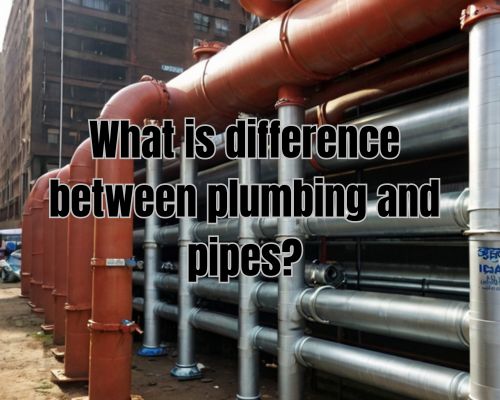
When it comes to plumbing, there are many terms and concepts that can be confusing. One common question is: what is the difference between plumbing and pipes? Let us know it with Dean Owens of Plumber Warragul.

plumbing pipes connections

While the two terms are related, they are not interchangeable. Understanding the difference can help you better maintain and repair your plumbing system.

In general, plumbing refers to the entire system of pipes, fixtures, and appliances that make up a building’s water and drainage system. This includes everything from the water supply coming into the building to the sewer line that takes wastewater away.

Pipes, on the other hand, are just one component of the plumbing system. Pipes are the tubes that transport water and other materials through the plumbing system.

Understanding Plumbing and Pipes

Definition and Scope of Plumbing

Plumbing is the system of pipes, fixtures, and other apparatuses used for the distribution of water supply, drainage, and sewage, as well as for gas supply in residential, commercial, and industrial buildings. The plumbing system is an essential part of any building as it ensures the safe and efficient distribution of water and other fluids.

Plumbing systems are designed to meet specific needs and requirements, depending on the type of building and the intended use of the plumbing.

For example, residential plumbing systems are designed to supply clean water for drinking, cooking, and bathing, as well as to remove wastewater and sewage from the building.

On the other hand, commercial and industrial plumbing systems are designed to handle larger volumes of water and other fluids. They may also include specialized systems for specific purposes, such as cooling or heating.

Types of Pipes and Their Uses

Pipes are an essential component of any plumbing system, as they are used to transport fluids from one place to another. There are several types of pipes used in plumbing systems, each with its own unique characteristics and uses.

  1. Copper Pipes: Copper pipes are commonly used in residential plumbing systems, as they are durable, corrosion-resistant, and can withstand high temperatures and pressures. They are often used for hot and cold water supply lines, as well as for gas supply lines.
  2. PVC Pipes: PVC (Polyvinyl Chloride) pipes are lightweight, easy to install, and cost-effective, making them a popular choice for residential plumbing systems. They are commonly used for drainage and sewage systems, as well as for vent pipes and cold water supply lines.
  3. PEX Pipes: PEX (Cross-linked Polyethylene) pipes are flexible, easy to install, and resistant to corrosion, making them a popular choice for residential plumbing systems. They are often used for hot and cold water supply lines, as well as for radiant heating systems.

Materials in Pipe Construction

The materials used in pipe construction depend on the intended use of the pipe, as well as the specific requirements of the plumbing system. Some common materials used in pipe construction include:

  1. Copper: Copper is a durable, corrosion-resistant metal that is often used in plumbing systems for hot and cold water supply lines, as well as for gas supply lines.
  2. PVC: PVC is a synthetic plastic polymer that is lightweight, easy to install, and cost-effective. It is commonly used for drainage and sewage systems, as well as for vent pipes and cold water supply lines.
  3. PEX: PEX is a flexible, cross-linked polyethylene material that is resistant to corrosion and easy to install. It is often used for hot and cold water supply lines, as well as for radiant heating systems.

Comparative Analysis of Plumbing and Piping

Functional Differences

Plumbing and piping are two distinct systems that serve different purposes. Plumbing is primarily used for the distribution of potable water and the removal of wastewater from homes and buildings. Piping, on the other hand, is used in industrial applications to transport fluids, gases, and other materials.

While plumbing follows municipal codes, process piping contractors follow engineering standards and regulations, such as ASCME and OSHA standards.

Some process piping functions include mixing and separating fluids, stopping and starting fluid flow, and conveying substances over longer distances.

Material Characteristics and Selection

Plumbing and piping systems are made of different materials, each with its own unique characteristics.

Copper pipes are commonly used in plumbing systems due to their durability, resistance to corrosion, and ability to withstand high water pressure. Meanwhile, PVC and plastic pipes are also popular choices due to their affordability, lightweight, and flexibility.

In contrast, piping systems used in industrial applications require materials that can withstand harsh chemical environments. Materials such as stainless steel, high-density polyethylene, and thermoplastic resin are commonly used in process piping due to their strength, resistance to corrosion, and durability.

Installation, Maintenance, and Regulations

Plumbing and piping systems need different practices for installation, maintenance, and regulations.

Plumbing systems are installed and maintained by licensed plumbers like Plumber Warragul. They follow local building codes and regulations. These regulations make sure that the plumbing system is safe. They also make sure that it meets health and sanitation standards.

Meanwhile, process piping is installed and maintained by specialized contractors. They follow engineering standards and regulations. These regulations make sure that the piping system is safe. They also make sure that it meets the specific needs of the industrial application.

In terms of maintenance, plumbing systems need regular inspections and cleaning. This is to ensure that the system is functioning properly. It also prevents the buildup of harmful bacteria.

On the other hand, process piping systems need regular maintenance to prevent leaks, corrosion, and other issues. These can compromise the integrity of the system.